Invitation-only Conference on
MODELLING COMPLEXITY IN MECHANICS
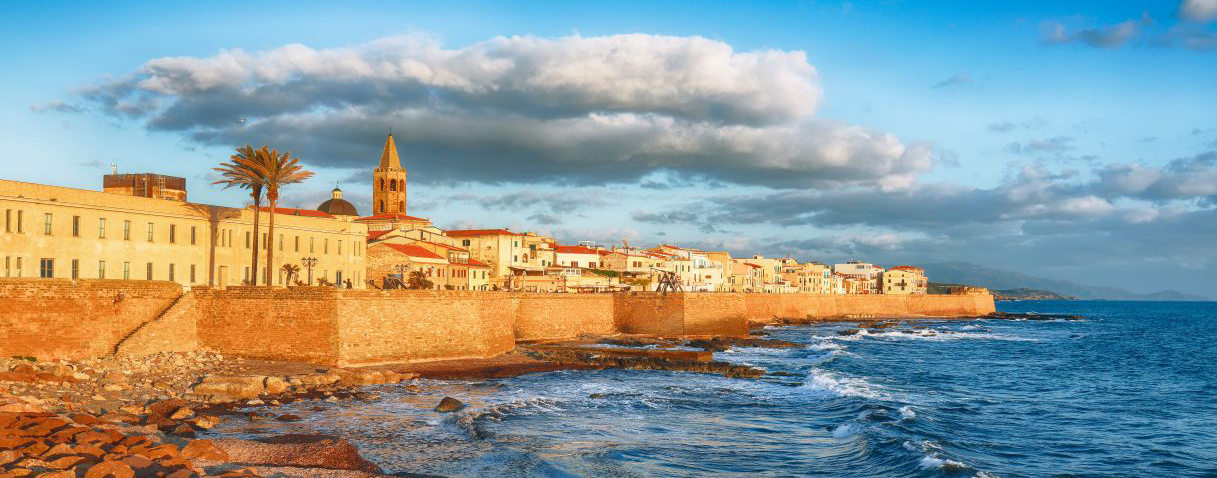
25-29 September 2023, Alghero, Sardinia, Italy
Mini-Symposia
MS “Bridging the nano-to-micro mesoscale”
Organizer: Enrico Masoero
Description
The nano-to-micro mesoscale is challenging because it eludes the domains of applicability of established theoretical and computational methods. At the nanoscale, statistical mechanics and atomistic simulations can reproduce fundamental processes such as (some) chemical reactions and plastic deformations. However, these methods are limited to the nanometre and nanosecond scales. On the other end, continuum-based approaches and other computational methods rely on governing equations whose validity is established at larger scales but questionable below the micrometre, where the discrete and discontinuous nature of materials is still effective. Bridging the nano-to-micro mesoscale gap requires process-specific choices leading a coarse-graining of atomistic models that must retains the phenomena of interest while simplifying the expendable details and (ideally) retaining a rigorous statistical mechanical description of the system. If successful, these methods can provide constitutive relationship and inspired appropriate governing equation for larger-scale models and simulations. The aim of this proposed theme is to gather scientists working on bridging this mesoscale, for mechanical processes primarily but also looking at their coupling with chemical and electrical phenomena, e.g. in crystal growth and dissolution, concrete microstructure development, and metal corrosion.
Confirmed talks:
• Emanuela del Gado (Georgetown University, USA), “ Microscopic stresses and stress relaxation in soft amorphous materials” Keynote lecture
• Enrico Masoero (Cardiff University, UK), “Kinetic Monte Carlo simulations of chemomechanical processes during microstructure evolution“
• Katerina Ioannidou (CNRS, Francia), “Fundamentals of cement poromechanics”
• Christophe Labbez (CNRS, Francia), “Chemical equilibrium under mechanical stress”
• Roland Pellenq (CNRS, Francia e Georgetown University, USA), “Potential of mean force and replica MD to bridge length and time scale in modelling complex materials”
• Benoit Coasne (CNRS, Francia), “Dynamics in compliant nanoporous materials: Coupling multiscale dynamics and mechanics”
• Guido Raos (PoliMI), “Coupled electrical-mechanical phenomena in lithium batteries” (or, “Mechanics of polymer chains, networks, and nanocomposites”)
• Giovanni di Luzio (PoliMI), “Discrete modeling of self-healing materials”
MS “Multiphysics metamaterials for wave propagation and vibration control”
Organizers: Andrea Bergamini, Boris Lossouarn, and Bart Van Damme
Description
Metamaterials can be obtained from micro-structured systems that have a strong coupling between global deformation and some internal degrees of freedom. For example, the inclusion of suitably designed locally resonating units allows for the modification of the dispersive properties of a medium. The nature of the inclusions is often purely mechanical, but in some cases, adaptive materials are exploited to tune the local properties of a “multiphysics” metamaterial. In mechanical metamaterials, “multi-physics” could refer to electromechanical (through piezoelectric, magnetostrictive or electromagnetic coupling), vibroacoustic, thermomechanical, optomechanical effects, etc. Thanks to those energy transfers between domains with different underlying physics, the modification of the elastic components defining the properties of the media provides additional degrees of freedom allowing alternative designs of mechanical structures or wave-guides.
The objective of this MS is to foster the interaction between scientists from different communities, not necessarily already involved in the field of metamaterials. The main goal is to share ideas and knowledge related to the use of multiphysics coupling in the synthesis of new types of sub-structures or
adaptive materials offering non-conventional behavior in terms of structural dynamics or wave propagation.
Confirmed talks:
• Gabriele Cazzulani (Politecnico di Milano, Italy), “Wave propagation/metamaterial”
• Boris Lossouarn (Conservatoire national des arts et métiers (Cnam), France), “Electrical analogues of curved structures”
• Gaëtan Kerschen (Université de Liège, Belgium),“A virtual acoustic black hole”
• Adrien Pelat (Université du Mans, France), “Achitected metamerials for noise control”
• Florian Allein (ISEN Lille), “Space-time modulation of piezoelectric phononic crystals”
• Vincent Tournat (Université du Mans, France), “Nonlinear waves and Acoustics”
• Manuel Collet (École Centrale de Lyon, France), “Adaptive metasurfaces for vibroacoustics”
• Bruno Morvan (Université du Havre, France), “Piezoelectric metamaterials”
MS “Computational methods for modelling complex media”
Organizers: Christophe Droz, Bilen Emek Abali
Description
Metamaterials are increasingly used in science and technology, ranging from nano-scale photonics to macro-scale seismic barriers. This trend towards multi-functional structural or material concepts leads to a fast – and sometimes staggering – complexification of their material or geometrical topologies. Alas, intensive computation is often the ransom of complexity. The multi-scale and multi-physics nature of metamaterials, combined with the vast design possibilities offered by modern manufacturing technologies and the growing demand for design and optimization strategies based on high-resolution models, is indeed posing a considerable challenge on the computational efficiency of available models and methods nowadays. This mini-symposium is therefore devoted to the numerical challenges associated with the modelling of metamaterials. It aims to gather scientists with a keen interest for tackling these computational, algorithmic or simulation-intensive facets of metamaterial science, beyond scales, physics and applications. Latest contributions oriented towards the development of faster and more efficient formulations for high-dimension problems associated with the modelling of complex materials (e.g. architected, periodic, multi-scale, lightweight, composite, …). Two main topics of interest are (i) model-order reduction techniques exploiting special physical properties of the structure or medium (e.g. symmetries, representative volume element, periodic boundary conditions such as Floquet-Bloch theory, wave-mode and domain decomposition, multiscale reduction and parameter determination), and (ii) efficient and scalable algorithms for metamaterial modelling (e.g. custom eigenproblems and solvers for wavenumber extraction, finite element, transfer and sparse matrix methods, computation-intensive modelling strategies for material optimization). Furthermore, we aim to establish bridges between computational, phenomenological and state-of-the-art metamaterial engineering domain knowledge, to promote cross-disciplinary and -sectoral exchange of ideas.
MS “Dynamics of heterogeneous and discontinuous materials and structures”
Organizers: Igor Berinskii ( Tel Aviv University), Igor Ostanin (University of Twente)
Description
Dynamic properties of heterogeneous mechanical systems, including microstructured metamaterials, granular matter, fibers, waveguides, and biological tissues, attract increasing attention. The extensively researched phenomena include acoustic filtering, a broad spectrum of nonlinear phenomena, complex collective dynamics, acoustic cloaking, energy absorption, and many others. Possible applications range in scales and domains, from live tissue imaging and noise-suppressing metamaterials to earthquake mitigation. Our mini-symposium is a forum for experimentalists and theoreticians working in related domains to share their recent advances and discuss efficient methods, including experimental techniques, numerical modeling techniques, statistical/machine learning tools, and the most recent theoretical developments in the fields. We expect a fruitful exchange of ideas in this broad field and help establish new productive collaborations.
MS “Peridynamics and its Applications”
Organizers: Erkan Oterkus (University of Strathclyde), Selda Oterkus (University of Strathclyde)
Description
This mini-symposium focuses on the recent developments of peridynamic mechanical and mathematical models and their applications in the solution of multiscale and multiphysics problems including damage and fracture as well as numerical solution methods. Other non-local models are also welcome.
Other thematic subjects:
Homogenisation methods (heuristic and rigorous);
Metamaterials for biomechanics;
Numerical Methods in mechanics;
Variational Principles;
Coupled optical/mechanical phenomena.